1A woman whose name was not kept名の残らなかった女性
In the same age as Yi Sam-pyeong, the celebrated father of Arita ware, there lived a woman.
At the end of the 1500s she crossed from Korea, taught several hundred potters in Kyushu and gave herself to the founding of Arita ware. Yet her name was buried in the long course of history and hardly passed from mouth to mouth. No documents survive. Even her real name is not certain.
Gentle in appearance and long-lived, she was called by her descendants, with love and respect, Baekpasun. In Japanese, Hyakubasen.
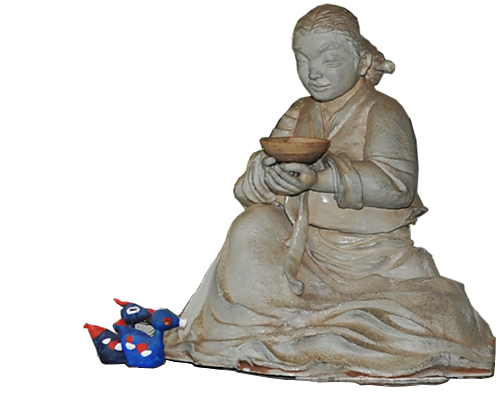
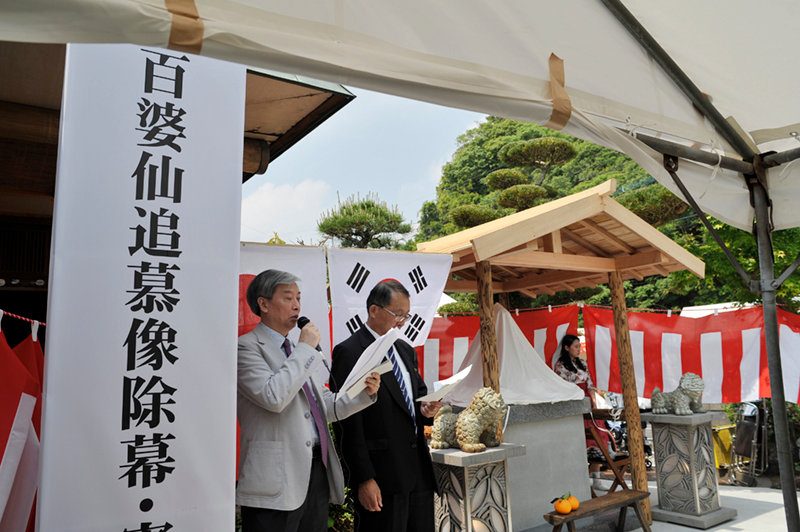
Unveiled 29 April 2018
2The invasion of 1592文禄の役
South of Shanghai lies the port of Ningbo, known since the Nara period as the landing place of Japanese crossing to the continent. On 13 April 1592, Toyotomi Hideyoshi, who intended to make Ningbo his final home and to conquer Ming China, raised the banner “Borrow the road to Ming”. With Konishi Yukinaga’s 18,000 men in the vanguard his forces landed at Busan and took it in a moment.
The armies of Nabeshima Naoshige and Kato Kiyomasa, some 22,000 men including soldiers who must have been gathered from around Arita, moved on Gyeongju. Japanese forces of more than 158,000 landed one after another, and the cities and villages of the whole country, beginning with the capital, were burned almost to the ground. This was the invasion the Japanese call the Bunroku campaign.
A Japanese record of the time, the memorandum of Yoshino Jingozaemon, tells of cutting down, trampling and killing women, men, dogs and cats alike as a blood offering to the god of war. Swallowed by the tide of history, great numbers of Koreans lost their lives, and great numbers of Japanese soldiers died as well.
3Takeo, and the kilns of Uchida武雄、内田の窯
Having barely survived the war, Baekpasun crossed the rough Genkai Sea with her husband Jongjeon and landed in a foreign land, Takeo.
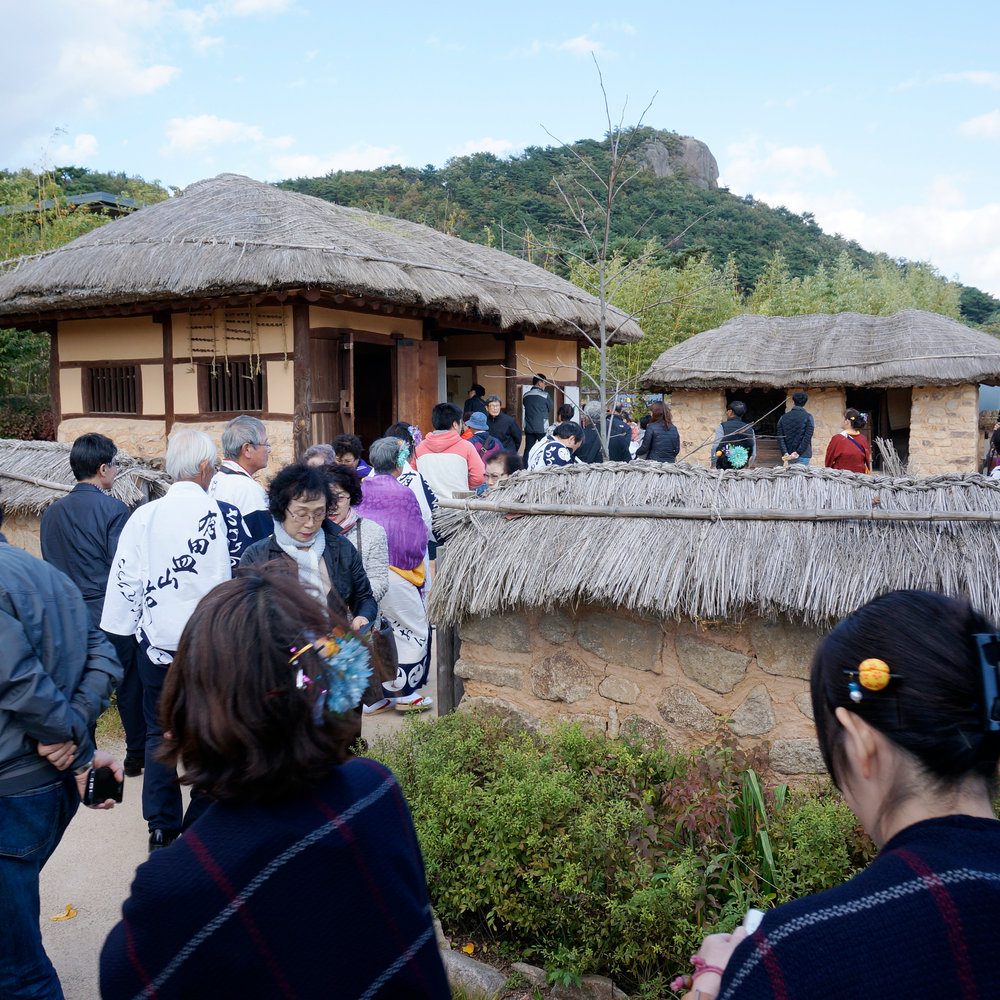
Under the protection of Goto Ienobu, lord of Takeo, and comforted by the virtuous priest Bessho of Kōfukuji Temple, she and her husband and their family are thought to have fired pottery at Uchida. Few people now visit Kannon-yama, the hill the Korean potters of Arita are said to have climbed to look towards home.
4To Arita有田へ
In 1616 Yi Sam-pyeong found porcelain stone at Izumiyama in Arita. In 1618 Baekpasun lost her husband.
A little over ten years later, in 1630, at around the age of seventy, she led her family to Arita. The Korean embassies to Japan had resumed and some Koreans returned home. She did not. Until her death in 1656 at the age of 96 she stayed, a leader of many potters in the making of Arita ware. This is why she is remembered as the mother of Arita ware.
5The name Baekpasun, and her hometown百婆仙という名と、故郷
Baekpasun is not her real name. It is the name her descendants gave, with love and respect, to a woman gentle in appearance and long in years. At Hōonji Temple in Arita the memorial pagoda raised by her great-grandson still stands.
As for her hometown, the most widely held view today is Gimhae in Korea. A lecture by a researcher from Gimhae described her home village and the times she lived in. The gallery has kept up cultural exchange with Gimhae since 2016.
The Fukami family, her descendants, continues into its 14th and 15th generations.
6The memorial statue and the gallery追慕像と館
2016 marked 360 years since Baekpasun’s death and 400 years since the founding of Arita porcelain. Until then little had been said of her. To reflect on the eventful life of one woman who lived in Arita, to honour her memory, and to deepen the bond between Japan and Korea that she wove, we opened Gallery Baekpasun and the Japan-Korea Friendship Hall Baekpasun in February 2016.
On 29 April 2018, the first day of the Arita Ceramics Fair, the memorial statue of Baekpasun was unveiled in front of the gallery by women artists active in Japan and Korea.
Exhibitions and exchange records